



Photo: CAO and BNP
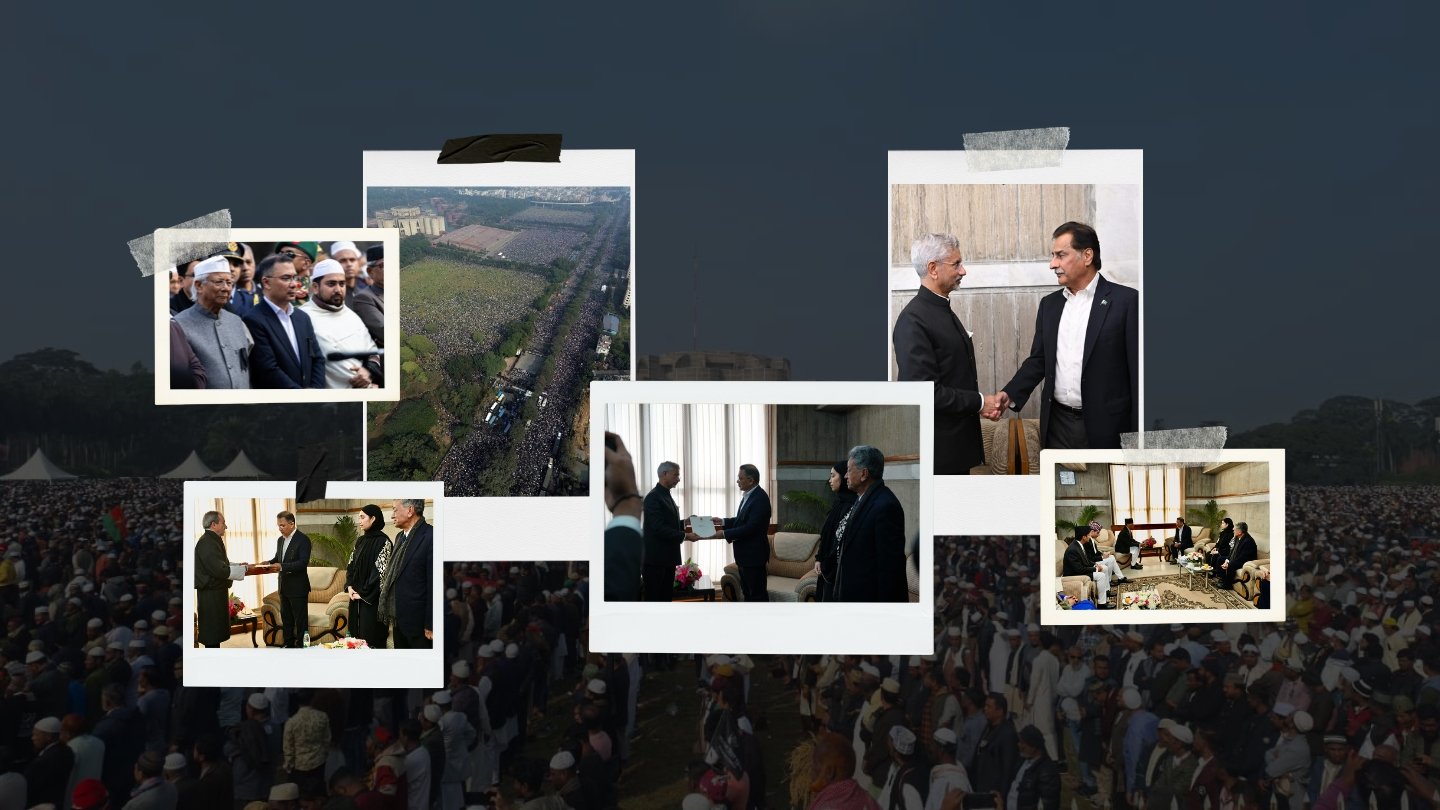
As the world prepared to welcome the New Year, a remarkable chapter in history unfolded in the heart of Bangladesh. On the final day of 2025, the streets of Dhaka transformed into a vast sea of humanity as millions gathered to bid a heartfelt farewell to Begum Khaleda Zia, the country’s first female Prime Minister and a prominent figure in the struggle for democracy.
In a rare demonstration of regional unity, the funeral of the “uncompromising leader” served as a bridge across South Asia’s often-fractured geopolitics. The presence of high-level representatives from nuclear rivals India and Pakistan, standing side by side, underscored the occasion’s profound international significance.
A group of top South Asian diplomats, including India’s External Affairs Minister Dr. S. Jaishankar, Pakistan’s National Assembly Speaker Sardar Ayaz Sadiq, Nepal’s Foreign Minister B. N. Sharma, Sri Lanka’s Foreign Minister Vijitha Herath, Bhutan’s Foreign Minister Lyonpo D.N. Dhungel, and the Maldives’ Minister of Higher Education, Labour, and Skills Development Dr. Ali Haider Ahmed, came Dhaka.
In a poignant departure from the traditional laying of wreaths, the visiting dignitaries personally handed formal condolence messages from their respective heads of state to Tarique Rahman, the late Prime Minister’s successor and son.
The gathering was a symbolic full circle for the region. Begum Zia’s late husband, President Ziaur Rahman, was the visionary founder of the South Asian Association for Regional Cooperation (SAARC). Years later, the attendance of almost every SAARC member nation at his wife’s funeral was a subtle yet significant revival of regional solidarity.
State media and international observers described the funeral as a historic milestone. With millions of mourners gathered, the event extended from Manik Mia Avenue to every major road in the capital, marking it as the largest funeral for a Muslim woman in modern history. The sheer size of the crowd served as a powerful testament to the deep emotional connection between the people and the leader who dominated the nation’s political landscape for decades.
As the last rays of the sun dipped below the horizon on that poignant evening in 2025, Begum Khaleda Zia was honored with a dignified state funeral at Chandrima Uddan, where she now rests beside her beloved husband, the late President Ziaur Rahman.
Her departure marks the end of a momentous era in Bangladeshi politics. She leaves behind a legacy of immense public devotion and a rare moment of regional unity that, for one day, brought a divided South Asia together in silence and respect.


